
Luings in Canada
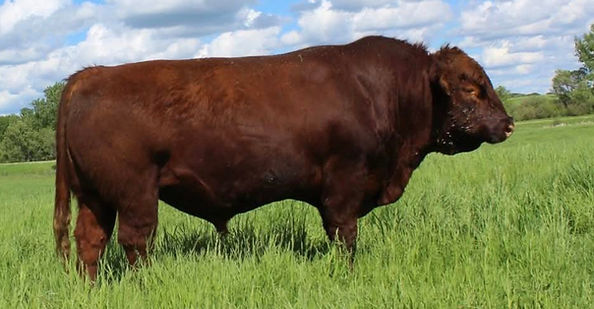
For over fifty years in Canada Luing cattle have proven themselves hardy, long-lived, productive mother cows on some of the toughest ranches in the country. With mature cows averaging 1230lb they are the most efficient size for the majority of cow/calf operations. Mature bulls typically weigh around 1900lbs. Luings are smaller framed relative to their weight than most other breeds and this offers the opportunity to reduce the size of your commercial cows by crossbreeding them to a Luing bull and retaining the daughters. As Luings are genetically unrelated to the more common breeds in North America crossbreeding with them has potential to release more heterosis in the F1 offspring leading to improved performance.
Luings possess a thick double hair coat in winter increases cow comfort and reduces feed requirements. The ability to shed off this winter coat and tolerate heat in summer is also important. For evidence of that ability please check out my “Summer hair coat” video under the Resources tab. Although a horned breed originally the Canadian Luing population is now around 98% polled, with many of those being homozygous polled.

Typical Canadian Luings
History of Luings in Canada
The first Luing cattle were imported into Canada in 1973 by A.R. "Sandy" Cross of Rothney Farms, Calgary. At Rothney, the Luings flourished among Sandy's world-renowned herds of Shorthorn and Galloway cattle. Other Canadian Luing breeders in the early days included Dr Bob Church at Lochend, the Lufts at Kathyrn, Hal Sears at Nanton, Walter Wearmouth at Cochrane and Winston Wolfenden at Brisco, British Columbia.
From 1978 to 1982 Luings were consigned to the annual multi-breed "Round-Up" sale held in Calgary every spring, achieving some of the highest average prices.
1979 was a banner year with Dr Church, Lochend Luing Ranch, securing the first prize Pen of 5 Crossbred Steers at Round-Up '79. He defeated 15 other entries from different breeds and his Luing x steers sold for the top price of the day.
Also in 1979, Winston Wolfenden won the Grand Champion Carcass Steer at the Pacific National Exhibition in Vancouver with a 3/4 Luing, 1/4 Maine Anjou steer.

Luing Bonus, a Scottish import in 1984 who had a huge influence on the Canadian Luing gene pool
The Snowlander Influence
The Snowlander strain of cattle were developed by Charlie Flick at Edgewood, British Columbia, in the 1930s by initially crossing a polled Shorthorn bull with his herd of Highland cows. This breeding project predated the Cadzow's development of Luings but the goal and methods used were much the same. An important difference was that the Snowlander was built on a 50% contribution from each breed rather than the Luings 5/8th Shorthorn 3/8th Highland blend. The Snowlander cattle were also developed as a polled strain due to the foundational sire being homozygous polled. Charlie, later in partnership with his grandson Dave Bilinski, refined their new breed for forty years before the very best of the Snowlander females were infused into the Luing breed in the late 1970s through the grade register. The Snowlander cattle at Edgewood had to survive largely on a diet of browse which grew among the tall timber on the rocky mountain sides. Like the severely challenging conditions the Luing breed was developed under in Scotland, this ensured that the cattle had built-in foraging ability. The Snowlander influence crucially introduced polled genetics into the Canadian Luing cattle population.

Russet, a 4 year old Snowlander bull in Charlie Flick's herd at Edgewood, British Columbia 1970